High-pressure drain cleaning
Drain line jetting for grease-heavy commercial kitchens
When kitchen lines keep slowing down, jetting helps remove grease, sludge, scale, and buildup from inside the pipe instead of only punching a temporary hole through the clog.
Pumping and jetting work together
Grease trap pumping removes the collected waste from the trap or interceptor. Jetting addresses buildup in the drain line itself. A kitchen with both trap issues and downstream line buildup may need both services to stop repeat problems.
The photos below show the type of grease and solids that can build up before service. Keeping the trap clean reduces the amount of FOG that reaches the drain line.
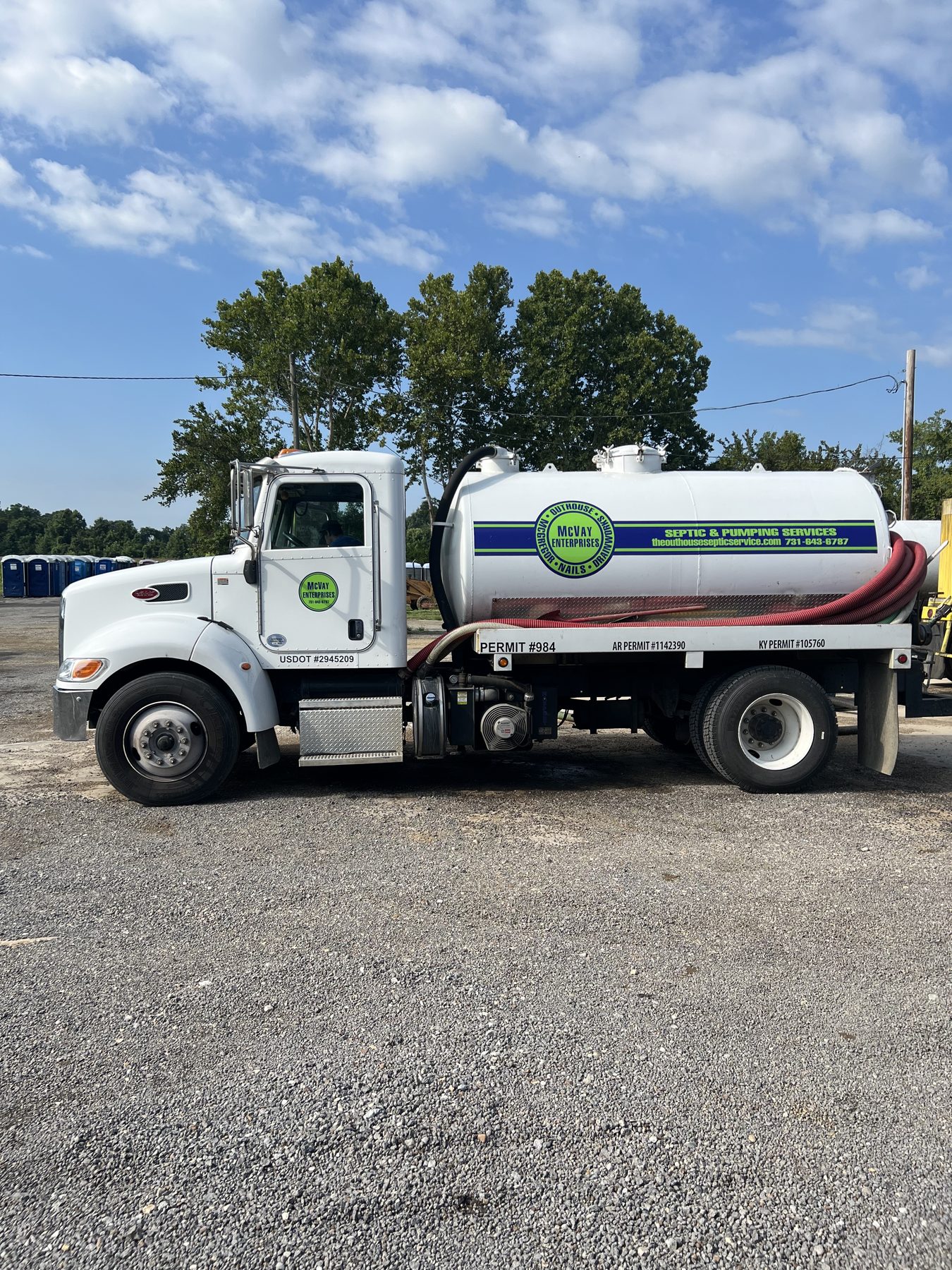
Grease buildup starts before the line clogs
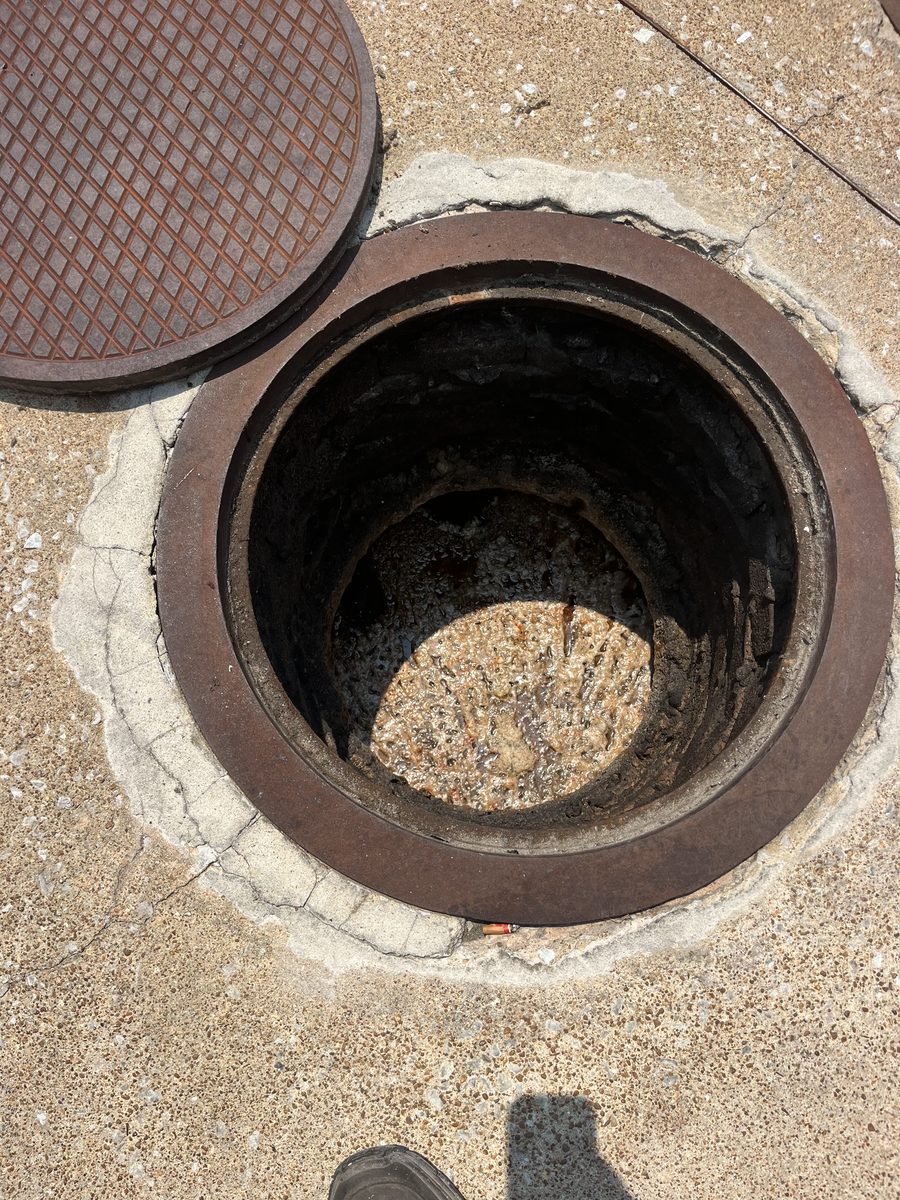
Outdoor trap with heavy buildup
The access opening shows accumulated grease and solids that need to be removed before they move downstream.
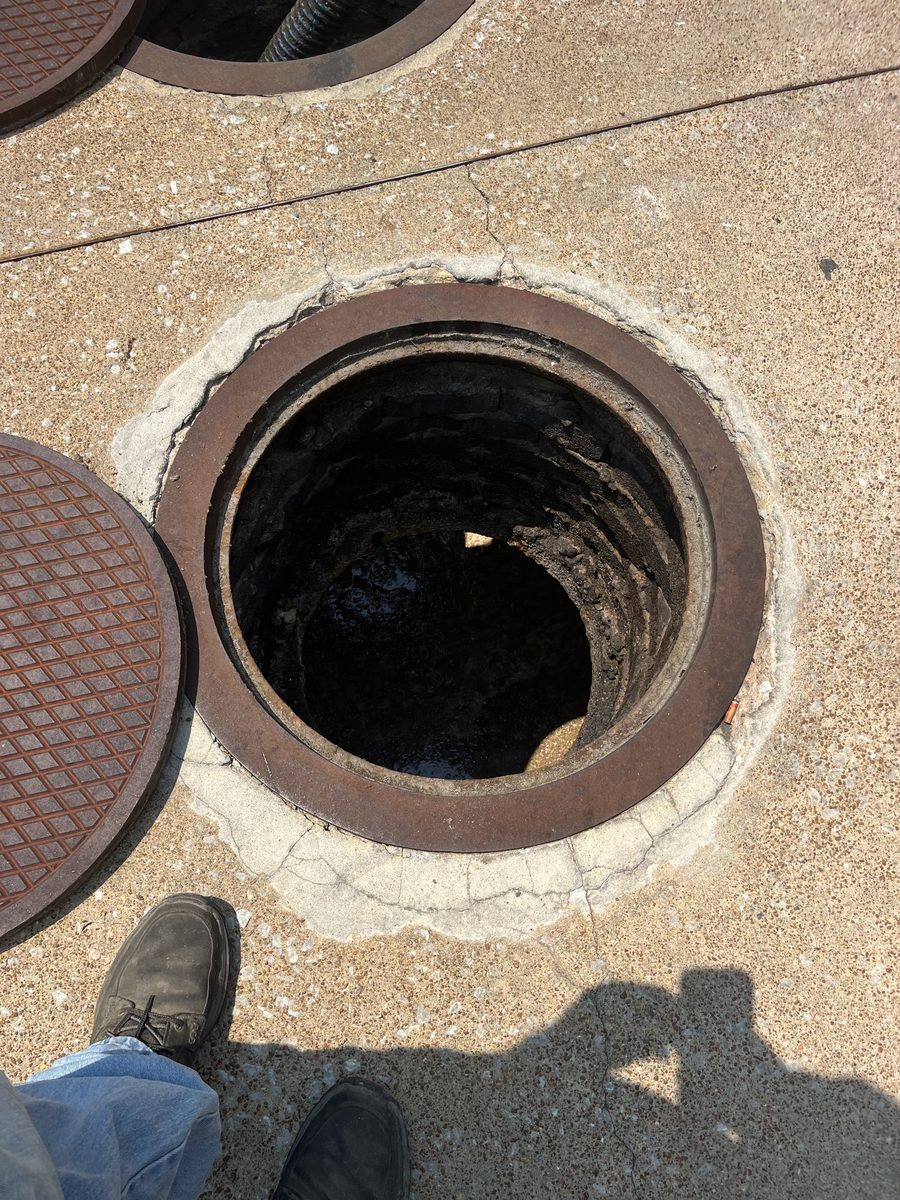
Surface buildup removed
The trap has been serviced and the heavy visible buildup has been pumped out, leaving the access area clear for inspection.
Common signs you need jetting
Recurring slow drains
Floor sinks, dish lines, mop sinks, or prep-area drains slow down again soon after being cleared.
Grease odors
Odors come back even when the trap has recently been serviced.
Backups during service
Water or waste appears at floor drains during high-volume kitchen hours.